
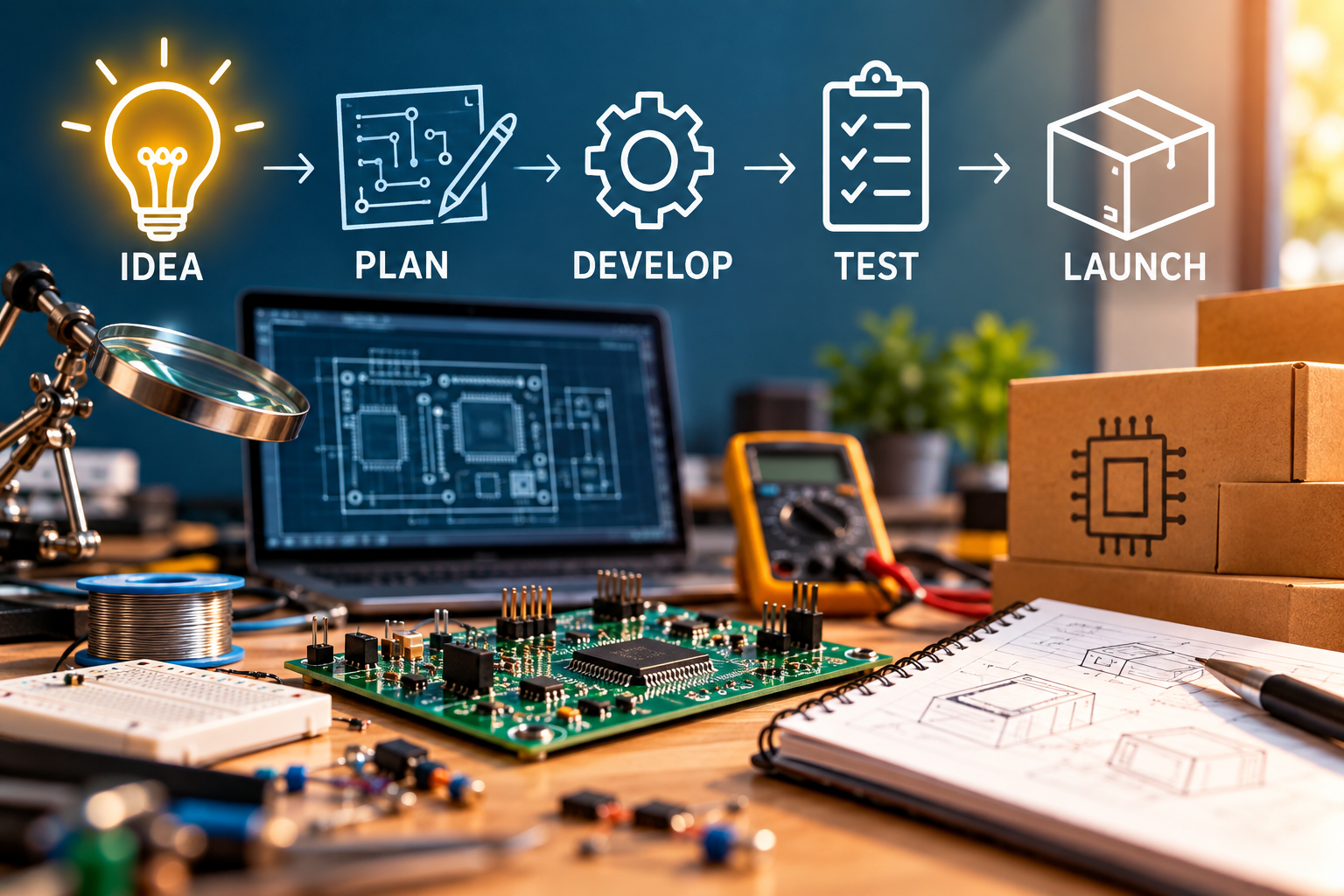
Aspiring electronics entrepreneurs often discover that turning a working prototype into a sellable product is less about one clever circuit and more about surviving electronics startup challenges that hit from every side. Early excitement can fade when the consumer electronics market demands reliability, compliance, supply consistency, and a clear reason to exist next to bigger brands. The difference-maker is entrepreneurial motivation with direction: a realistic view of what it takes to launch, and what “good progress” looks like before spending serious money. With the right expectations, those constraints become hardware innovation opportunities worth building around.
Quick Summary: From Idea to Electronics Launch
- Start by choosing a clear niche through focused niche identification.
- Validate demand with fast market research methods before spending serious money.
- Compare funding options for startups and pick what fits your stage and risk tolerance.
- Learn product manufacturing basics early to avoid costly design and production mistakes.
Build Your Electronics Business From Niche to Brand
This process matters because small early decisions affect your costs, risk, and how confidently you can launch.
- Step 1: Validate one narrow electronics niche
Start with a specific customer problem you can name in one sentence, like “a safer power solution for X” or “a simpler sensor kit for Y.” Check demand by scanning reviews, forums, and competitor listings to see what people complain about and what they gladly pay for. A tight niche makes sourcing, pricing, and marketing far easier. - Step 2: Define your first product and sourcing plan
Choose a “minimum sellable” first product, then list the parts, suppliers, assembly steps, and any basic safety or quality expectations you will need to meet. Price it backward by estimating your total cost per unit (parts, packaging, shipping, platform fees) and setting a target margin. This keeps you from building something exciting that cannot be sold profitably. - Step 3: Set a legal-setup checkpoint before filing
Pause here and compare business formation options like sole proprietorship, LLC, and corporations based on liability, taxes, admin time, and whether you plan to take on partners or investors. Do a quick state-by-state check of fees, annual requirements, and ongoing obligations, since costs vary widely and can surprise first-time founders. For example, California charges LLCs an $800 annual minimum franchise tax regardless of revenue, which can change what makes sense at launch. - Step 4: Build brand basics that match your niche
Pick a business name and visual style that clearly signals what you sell, then write a simple promise like “who it’s for, what it does, why it’s better.” Create a one-page site or storefront with a clear product story, basic FAQs, and an email signup so you can collect interest before your first batch is ready. Brand clarity makes marketing feel less like shouting and more like helping. - Step 5: Launch a small test and tighten the loop
Run a limited release with a small inventory or preorders, then track a few simple numbers like conversion rate, return reasons, and the top three questions customers ask. Use that feedback to adjust packaging, instructions, and positioning before you scale, spend or expand the product line. Each cycle gets you closer to repeatable sales.
Use AI-Guided Planning to Form an LLC Without Losing Momentum
Once you’ve chosen your niche and started shaping a real brand, the fastest way to stall is getting buried in setup tasks instead of building. An all-in-one business platform can keep you moving by combining AI-guided planning with step-by-step support to start, run, and grow the company in one place, so you’re not bouncing between tools or second-guessing what comes next. With ZenBusiness, you can get guided help that keeps the paperwork and early admin work aligned with your plan, while automation reduces the busywork that drains founder time.
Whether you’re forming an LLC, managing compliance, creating a website, or handling finances, this type of platform can provide comprehensive services and expert support to help set you up for business success. With that foundation in place, you can shift your attention to building an edge through innovation and quality control customers can trust.
Understanding Innovation That Holds Up at Scale
Product innovation in electronics is not just a clever feature. It is a mindset of solving a specific problem better than alternatives, then proving you can build it the same way every time. That means your prototype is not the finish line, it is the first test of a system. If you only chase differentiation, early customers may love the idea and still return the product later. Strong makers connect prototyping to a process of verifying the product across sourcing, assembly, firmware, and packaging.
Picture a smart sensor that works great on your bench, then fails after a hot week in a truck. Defining checks for functionality performance reliability turns that hard lesson into a repeatable build. With that lens, funding, suppliers, and manufacturing choices get much easier to evaluate.
Electronics Startup FAQs Founders Actually Ask
Q: What funding sources make sense before I have sales?
A: Start with bootstrapping, grants, and pre-orders if you can deliver a clear timeline. Angel investors can fit early when you have a credible prototype plan and a realistic cost bill of materials. Venture capital for hardware startups usually comes later, when you can show repeatable builds, early traction, and a path to scale without quality collapsing.
Q: How do I pick component suppliers without getting burned?
A: Choose authorized distributors or vetted manufacturers first, then compare lead times, minimum order quantities, and traceability paperwork. Order small evaluation lots, run incoming inspection, and lock alternates for every critical part. If a deal seems too cheap, assume you are paying with risk.
Q: What manufacturing process should I use for my first build?
A: For early units, use a local or specialized contract manufacturer that supports low-volume assembly and quick feedback. Ask for a process document, test plan, and clear rework rules because a method is a structured procedure for hitting a goal consistently.
Q: When is it worth talking to venture capital for hardware startups?
A: Reach out when you can defend your unit economics, supply plan, and reliability results with real data, not optimism. Hardware VCs want to see that you can manufacture, not just invent, so bring quotes, yields, and a scaling roadmap.
Q: How do I manage supply chain risk when parts go out of stock?
A: Build a dual-sourcing plan, qualify substitutes early, and keep a simple dashboard for lead times and inventory. If you need to hire, plan ahead because 77% of firms cannot find qualified hardware engineers in 2026, and delays can ripple into production.
Turn Your Electronics Idea Into a One-Week Launch Plan
It’s easy to get stuck between a promising circuit idea and the messy realities of funding, suppliers, and manufacturing decisions. The way through is an entrepreneurial mindset that favors clear assumptions, fast validation, and consistently applying startup knowledge instead of waiting for certainty. When that becomes your default, business growth motivation stops depending on mood and starts coming from momentum, and electronics venture success becomes a set of repeatable choices. Momentum comes from decisions you can test, not plans you can perfect.